

The Whippet
| Size | Medium |
| Weight | Females: 9–13 kgs, Males: 12–15 kgs |
| Breed Group | Group 4 – Hounds |
| Exercise Requirements | Moderate to High |
| Grooming Requirements | Low |
| Life Span | 12–15 years |
| Characteristics | Gentle, Affectionate, Intelligent, Athletic, Playful |
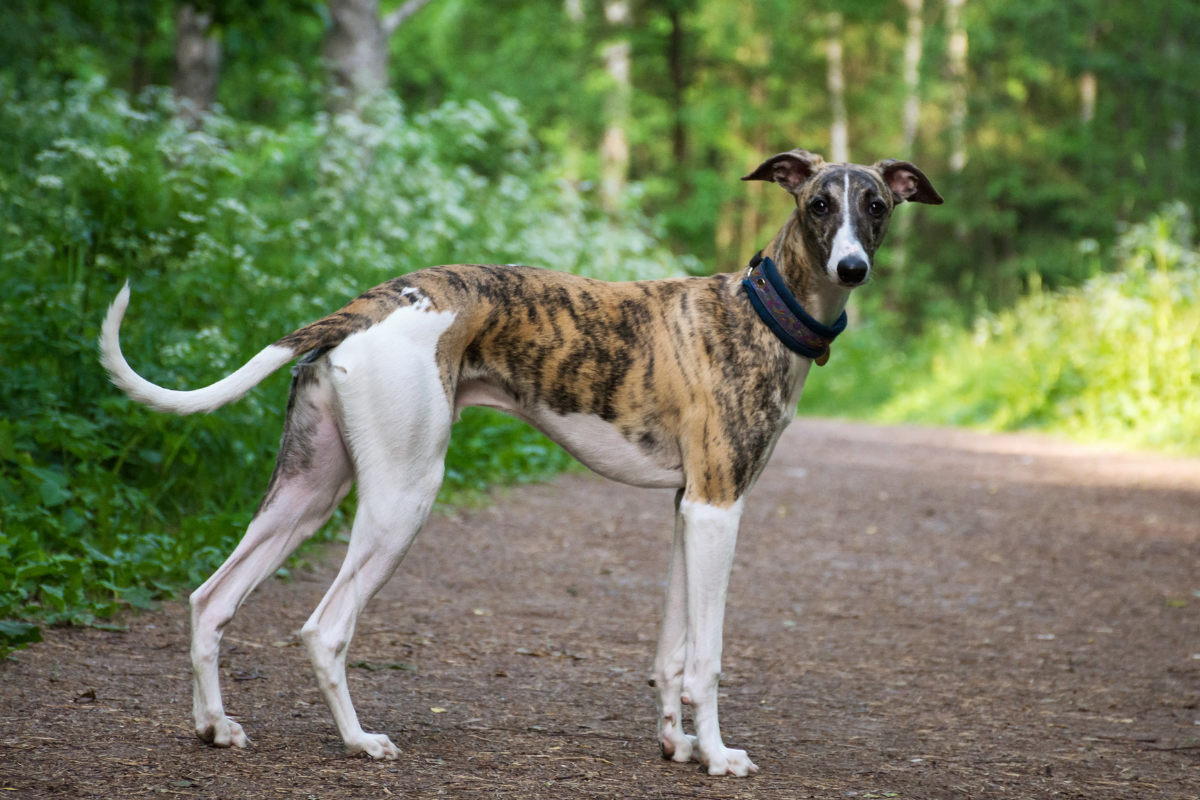
The Whippet is a sleek, athletic breed known for its speed, agility, and affectionate nature. Originally bred for coursing and hunting small game, this elegant sighthound has since become a beloved companion known for its gentle temperament and adaptability.
Bred for speed and efficiency, Whippets are capable of reaching remarkable speeds in short bursts, making them exceptional sprinters. Their lean, muscular build and keen eyesight allow them to excel in lure coursing, agility, and other fast-paced activities. Despite their athleticism, they are content relaxing at home, earning them the nickname ‘the fastest couch potato.’ However, they still need daily exercise to stay fit and happy.
Today, Whippets continue to excel in dog sports and thrive as affectionate companions in a variety of households. Their easygoing nature, intelligence, and low-maintenance grooming make them a fantastic choice for both active individuals and families.
Whippet Appearance
Whippets are known for their sleek, aerodynamic build, expressive eyes, and graceful movement.
Size:
The Whippet is a medium-sized breed built for speed and agility. Males typically stand between 47–51 cm at the shoulder, while females range from 44–47 cm. Their slender but muscular frame enables them to sprint at incredible speeds while maintaining endurance for longer runs.
Coat:
Their short, fine coat lies close to the skin and requires minimal grooming. Whippets come in a wide variety of colours and patterns, including solid, brindle, fawn, blue, black, and white. Their coat lacks an insulating undercoat, making them sensitive to cold weather.
Distinctive Features:
Whippets have large, dark, expressive eyes that reflect their gentle and intelligent nature. Their long, narrow head, small rose-shaped ears, and deep chest contribute to their elegant and athletic appearance.
Elegance and Agility:
With their effortless, ground-covering stride, Whippets move gracefully and with precision. Their lean physique, combined with their speed and agility, allows them to excel in racing, coursing, and other fast-paced activities.
Whippet History
The Whippet’s history is deeply rooted in coursing and hunting, with a reputation as a swift and efficient sighthound.
Origins in England
Whippets were developed in 19th-century England as a smaller, more affordable alternative to Greyhounds for hunting small game, particularly rabbits. They became popular among working-class hunters and quickly gained recognition for their exceptional speed and hunting ability.
Breed Development
Originally bred from Greyhounds and smaller terrier-type dogs, Whippets were refined to enhance their speed and agility. Their ability to chase prey by sight rather than scent made them ideal for coursing and racing.
Recognition and Popularity
By the early 20th century, Whippets were gaining popularity beyond hunting and coursing, transitioning into competitive racing and companion roles. Their affectionate nature and adaptability made them sought-after pets in both active and relaxed households.
Whippets Today
Today, Whippets remain popular for their versatility—excelling in dog sports, therapy work, and as loving family companions. Their combination of athleticism and affection makes them an excellent choice for those seeking an energetic yet gentle breed.
Find Registered Whippet Breeders or Whippet Puppies for Sale
Whippet Dog Personality
Whippets are intelligent, affectionate, and gentle dogs that make excellent companions. They are highly adaptable and thrive in a calm home environment while also enjoying bursts of high-speed activity. While independent at times, they form strong bonds with their families but are less clingy than some breeds.
General Traits:
- Intelligent and Trainable: Whippets are quick learners but can have an independent streak. They respond well to positive reinforcement.
- Affectionate and Loyal: They are loving and enjoy curling up with their owners after playtime.
- Calm but Playful: While they have high-speed energy bursts, they are typically relaxed and quiet indoors.
Watchdog Tendencies:
- Alert but Friendly: Whippets are observant and aware of their surroundings but are not aggressive watchdogs.
- Reserved with Strangers: They may be cautious around unfamiliar people but usually warm up quickly.
- Minimal Barking: They are not prone to excessive barking and are generally a quiet breed.
Trainability:
- Responsive but Independent: While they enjoy learning, Whippets can be somewhat independent and may require patient training.
- Sensitive to Harsh Methods: They respond best to gentle, reward-based training and consistency.
- Mental Stimulation is Important: While not as demanding as working breeds, they benefit from enrichment activities such as lure coursing and puzzle toys.
Love of Activity and Engagement
- Sprinter, Not a Marathoner: Whippets love short bursts of running but do not require excessive exercise.
- Enjoys Family Interaction: They prefer being around their owners and dislike long periods alone.
- Adapts Well to a Relaxed Home: While they enjoy playtime, they are also content lounging indoors.
Whippet as Family Pets
Whippets make fantastic family pets, especially in homes that provide a balance of activity and relaxation. They are affectionate and thrive on companionship but require a soft approach to training due to their sensitive nature.
Good with Kids? Yes, with Supervision!
- Gentle and Playful: They interact well with children and enjoy running and playing.
- Prefer Calm Interactions: They do best with respectful children who understand their sensitive nature.
- Fragile Build: Due to their lean frame, rough handling should be avoided.
Find Registered Whippet Breeders or Whippet Puppies for Sale
Whippet Health & Care
Whippets are generally healthy dogs with minimal grooming needs. However, they are prone to a few genetic and lifestyle-related health concerns. Regular vet care, a proper diet, and a safe exercise routine help maintain their well-being.
Common Health Concerns:
- Heart Murmurs: A murmur is a sound of turbulent blood flow that can be harmless (“innocent”) in some fit young sighthounds or a sign of heart disease. Puppies are screened at a yound age, and screening for heart issues should be conducted every 2 years to ensure that no no changes in heart health will develop. These heart issues may be a combination of genetic and environmental factors, so it's important to keep a consistent and healthy lifestyle.
- Mitral Valve Disease: Age-related wear of the mitral valve can cause a leak and exercise intolerance or cough in later life. Screening for heart issues should be conducted every 2 years to ensure that no no changes in heart health will develop. These heart issues may be a combination of genetic and environmental factors, so it's important to keep a consistent and healthy lifestyle.
- Epilepsy: A neurological condition causing repeat seizures, usually managed long-term with medication and lifestyle tweaks. There is currently no available test to screen for it, but breeders and owners should be aware that it is a potenial healh concern in he breed
Connecting directly, and speaking with registered Whippet Breeders is a great way to learn more about health concerns in the breed. You may also elect to connect with Whippet Breed Clubs in your state.
Care and Maintenance:
Whippets are easy to care for in terms of grooming but need regular exercise and mental stimulation to stay happy.
- Coat Care: Their short, smooth coat requires minimal maintenance. Weekly brushing helps remove loose hair and maintain a healthy coat. They shed lightly year-round, with slightly increased shedding during seasonal changes.
- Exercise Needs: While Whippets are known for their speed, they don’t require excessive exercise. Daily walks and occasional sprinting sessions in a secure area keep them happy and healthy. Lure coursing and fetch games provide excellent outlets for their natural chasing instincts.
- Diet and Nutrition: A high-quality, protein-rich diet supports their lean muscle mass and energy levels. Portion control is essential to prevent weight gain, as Whippets can become overweight if overfed. Fresh water should always be available, especially after exercise.
- Dental Care: Whippets are prone to dental disease, so regular brushing and dental chews help maintain oral health.
- Routine Veterinary Care: Regular vet check-ups, vaccinations, and parasite prevention keep them in top condition. Early detection of joint, heart, or eye issues can improve their quality of life.
Caring for Your Whippet
Providing excellent care for your Whippet means meeting their physical, mental, and emotional needs. With proper nutrition, exercise, and health care, your Whippet will thrive as a loving and well-balanced companion.
Regular Vet Visits
Routine veterinary check-ups help monitor their health and catch any potential issues early. Annual exams, vaccinations, parasite prevention, and dental care are essential for maintaining long-term well-being.
Nutritious Diet
A balanced, high-quality diet supports their energy levels, lean muscle mass, and overall health. Proper portion control is essential, as Whippets can be prone to weight gain if overfed. Consult your vet for dietary recommendations based on their age, activity level, and specific needs.
Exercise for Body and Mind
Whippets require moderate daily exercise, including walks and opportunities to sprint in a secure area. While they love running, they are not high-endurance dogs and are just as content lounging indoors. Mental stimulation, such as puzzle toys and obedience training, helps prevent boredom and keeps their mind engaged.
Grooming Needs
Their short, smooth coat is easy to maintain, needing only occasional brushing to remove loose hair. Regular grooming also includes nail trimming, ear cleaning, and dental care. Due to their thin coat and lack of body fat, Whippets need extra warmth in colder weather, so providing a coat or blanket during chilly months is recommended.
Mental Stimulation
Whippets are intelligent and enjoy interactive play, training, and social interaction. They do well in lure coursing, agility, and scent games. While they are independent at times, they respond well to positive reinforcement training.
Monitoring for Health Changes
Watch for changes in appetite, behaviour, or energy levels, as these may indicate underlying health concerns. Early detection and veterinary care can improve long-term health and quality of life.
By providing consistent care, companionship, and moderate activity, your Whippet will remain a happy, healthy, and affectionate companion.
Whippet Grooming
The Whippet’s short, sleek coat is low-maintenance but still requires regular care to keep it healthy and clean.
Regular Brushing
Brushing once a week with a soft bristle brush or grooming mitt helps remove loose hair and maintain coat health. Shedding is minimal, but regular brushing reduces hair around the home.
Bathing
Whippets do not need frequent baths, as their coat naturally repels dirt. Bathing every 6–8 weeks or when they get dirty is usually sufficient. A mild, dog-specific shampoo helps keep their skin from drying out.
Nail Trimming
Trim their nails every 3–4 weeks to prevent overgrowth and discomfort. Long nails can affect their movement and cause joint strain. If you hear their nails clicking on hard floors, it’s time for a trim.
Ear Cleaning
Check their ears weekly for dirt, wax buildup, or signs of infection. A vet-approved ear cleaner helps prevent irritation or infections.
Teeth Cleaning
Regular dental care is important for preventing plaque buildup and gum disease. Brushing their teeth several times a week and providing dental chews help maintain oral health. A professional dental check-up once a year is recommended.
Managing Coat Care
Whippets have thin skin and little body fat, so they are sensitive to extreme weather. In colder months, they need a coat or sweater to stay warm.
Proper grooming keeps your Whippet comfortable, healthy, and looking their best while also strengthening your bond with them.
Find Registered Whippet Breeders or Whippet Puppies for Sale
Is a Whippet Right for You?
The Whippet is an affectionate, gentle, and athletic breed that thrives in a calm yet active environment. They are known for their speed, grace, and easygoing nature, making them excellent companions for the right owner. While they are adaptable and loving, their exercise needs are moderate, making them suitable for many households if given room to sprint.
The Ideal Whippet Owner:
- Moderately Active: Whippets enjoy short bursts of high-speed running but are also content to lounge indoors. They are well-suited to owners who can provide daily walks and access to a secure area for sprinting.
- Appreciates a Calm and Affectionate Dog: These dogs form strong bonds with their families and enjoy quiet companionship. They thrive in a peaceful household where they can relax and be close to their owners.
- Patient and Gentle: Whippets are sensitive dogs that respond best to positive reinforcement. They require kind, consistent training and do not tolerate harsh corrections.
- Looking for a Loyal Companion: This breed loves being around people and prefers to be included in family life. If you want a quiet, affectionate, and adaptable dog, the Whippet may be a great match.
Not Ideal If:
- You Want a Guard Dog: Whippets are friendly and non-aggressive. While they may alert their owners to unfamiliar sounds, they are not protective or territorial.
- You Have a Sedentary Lifestyle: While Whippets enjoy lounging, they still require regular exercise to maintain their health and happiness. They need opportunities to stretch their legs in a safe environment.
- You’re Away for Long Periods: Whippets thrive on companionship and do not like being left alone for long hours. They can develop separation anxiety if not gradually accustomed to alone time.
- You Prefer a Dog That Tolerates Cold Weather Well: Due to their thin coat and lack of body fat, Whippets feel the cold easily. They require extra warmth in cooler climates and need coats or blankets in winter.
Crucial Considerations:
- Exercise Needs: Whippets need short, high-intensity exercise sessions but do not require excessive endurance training. Secure, enclosed areas are ideal for them to run freely.
- Grooming Commitment: Their short coat is low-maintenance and only requires occasional brushing. However, they shed lightly year-round.
- Training Approach: Whippets are intelligent but can be independent. They respond best to gentle, reward-based training and may not always be eager to obey commands if distracted.
- Close Companionship: This breed thrives in homes where they are treated as part of the family. They need affection and enjoy curling up on the couch with their owners.
Importance of a Reputable Whippet Breeder
Choosing a responsible breeder is essential to ensuring you bring home a healthy, well-adjusted Whippet. Ethical breeders prioritise health, temperament, and socialisation.
Responsible breeders provide health clearances and discuss potential health concerns openly.
Temperament Assessment
A well-bred Whippet should be calm, affectionate, and friendly. Ethical breeders evaluate their puppies’ temperaments to ensure they are placed in suitable homes.
Early Socialisation and Enrichment
Reputable breeders expose their puppies to various people, sounds, and environments to build confidence and adaptability.
How to Find a Reputable Breeder
- Do Your Research: Contact breed clubs or check platforms like Dogz Online for reputable breeders.
- Ask Questions: Ethical breeders are transparent about health testing, socialisation practices, and the puppies’ lineage.
- Visit the Breeder: Whenever possible, visit the breeder’s home or kennel to see how puppies are raised and meet the parent dogs.
Red Flags
Be cautious of breeders who:
- Avoid answering health or temperament questions.
- Do not conduct genetic testing.
- Prioritise profit over finding the right home for their puppies.
Choosing a responsible breeder ensures you bring home a well-socialised, healthy Whippet with a stable temperament—setting the foundation for a loving and lifelong companion.
How Long Does a Whippet Live For?
Whippets are gentle, sweet, and built for speed. They generally live between 12 and 15 years. Despite their athletic nature, they also love a cosy spot on the couch. With regular vet care and a healthy lifestyle, they often enjoy a long, peaceful life.
Adaptability
Adapts Well To
Whippets are adaptable and thrive in environments where they receive gentle care, companionship, and moderate exercise. Their affectionate and easygoing nature makes them a great fit for many households.
- Apartments and Small Homes: Whippets adjust well to indoor living due to their quiet nature and love of lounging. However, they still need daily walks and occasional sprinting opportunities in a secure area.
- Homes with Yards: While not a requirement, a secure yard provides space for short bursts of high-speed running. Fencing should be high enough to prevent escape, as Whippets may chase small animals.
- Families and Singles: They bond closely with their owners and enjoy being part of daily life. Whether with a family, couple, or single owner, Whippets are affectionate companions.
- Moderately Active Owners: They appreciate daily walks and occasional running but are content to rest indoors for much of the day.
Important Considerations:
- Exercise Needs: Whippets need short, intense exercise sessions but are generally low-energy indoors.
- Mental Stimulation: Although not demanding, they enjoy interactive play and social engagement.
- Companionship: They crave human interaction and do not cope well with long periods of isolation.
- Cold Sensitivity: Due to their thin coat, they need warm bedding indoors and jackets for cold weather.
- Low Grooming Needs: Their short coat requires minimal care, but they shed lightly year-round.
With the right balance of care, exercise, and warmth, Whippets adjust well to a variety of living situations.
Adapts Less Well To
While Whippets are adaptable, their specific needs make them less suited to certain lifestyles and environments.
Adapts Less Well To
- Very Cold Climates: They lack an insulating coat and are highly sensitive to cold weather. They require warm clothing in winter and should not be left outside for extended periods.
- Homes Without Secure Fencing: Their strong prey drive means they may chase small animals, making secure fencing essential.
- Busy or Noisy Households: Whippets prefer calm environments and may become anxious in chaotic settings.
- Long Periods Alone: These dogs are affectionate and rely on human companionship. Being left alone frequently can lead to separation anxiety.
Potential Solutions for Apartment Living:
- Frequent Walks: Daily walks and occasional access to a fenced area for sprinting will keep them happy.
- Mental Stimulation: Interactive toys, gentle training, and short play sessions help prevent boredom.
- Companionship: If left alone for long hours, consider a second dog or arrange pet-sitting.
Important Considerations:
- Low Exercise Needs Compared to High-Energy Breeds: Whippets love short bursts of running but do not require prolonged physical activity.
- Strong Chase Instinct: They need training and supervision in open spaces, as they may chase small animals or moving objects.
- Quiet but Sensitive: They are not excessive barkers but can be emotionally sensitive to loud noises and changes in routine.
With proper care and a secure environment, Whippets can thrive in various homes, as long as their warmth and companionship needs are met.
Good for Novice Dog Owners
Whippets are affectionate, gentle, and easygoing, making them an excellent choice for first-time dog owners. Their calm nature and minimal grooming needs add to their appeal. However, their sensitivity and prey drive requires understanding and management.
Why Whippets Are a Good Choice for Novice Owners:
- Mild Temperament: They are generally well-mannered, affectionate, and easy to live with.
- Easy Grooming: Their short coat requires minimal maintenance.
- Low Exercise Requirements: They need short bursts of activity but are content to relax indoors.
- Minimal Barking: They are not known for excessive vocalisation, making them suitable for quieter environments.
Challenges for Novice Owners
- Sensitive Nature: Whippets require gentle handling and positive reinforcement in training.
- Cold Sensitivity: They need extra warmth in winter, including coats and soft bedding.
- Prey Drive: Their instinct to chase requires leash training and secure outdoor areas.
- Separation Anxiety: They form strong bonds and do not tolerate being left alone for long periods.
How Novice Owners Can Succeed with a Whippet:
- Use Positive Reinforcement: Gentle training methods work best, as harsh corrections can cause fearfulness.
- Provide Warm, Comfortable Spaces: Soft bedding and warm indoor environments keep them happy.
- Ensure Secure Outdoor Access: A fenced yard or safe off-leash areas allow them to enjoy their natural sprinting ability.
- Offer Companionship: Whippets thrive in homes where they are included in daily life.
For first-time owners seeking a loving, low-maintenance, and easygoing dog, the Whippet is an excellent choice, as long as their comfort and companionship needs are met.
Sensitivity
Sensitivity Level
Whippets are highly sensitive dogs that form deep bonds with their owners. They are gentle and responsive, often picking up on their owner's emotions and changes in routine.
What Makes Whippets Sensitive?
- Strong Emotional Connection: They are affectionate and thrive on companionship, easily affected by stress or changes in their environment.
- Quiet and Observant: Whippets are not overly vocal but are highly aware of their surroundings, often preferring calm and predictable settings.
- Gentle Nature: They do not respond well to harsh training methods or loud environments, needing patience and positive reinforcement.
Ownership Impact
- Consistent and Gentle Leadership: They require a calm, reassuring approach in training to build confidence.
- Early Socialisation: Exposure to various people, places, and sounds helps prevent nervousness in new situations.
- Recognising Stress Signs: Signs like trembling, hiding, or excessive pacing may indicate discomfort or anxiety.
Important Considerations
- Separation Sensitivity: They dislike being alone for long periods and may become anxious if left without company.
- Training Approach Matters: Whippets respond best to positive reinforcement, while harsh corrections can make them fearful.
- Need for Comfort: They seek warm, soft places to rest and prefer quiet, low-stress environments.
The Positive Side of Sensitivity
Their emotional intelligence and deep loyalty make them affectionate companions who bond closely with their families. With a stable, loving home, Whippets flourish into gentle, well-mannered pets.
Tolerates Being Alone
Whippets are highly social dogs that prefer close companionship. While they can handle short periods alone, they do not thrive in households where they are frequently left without interaction.
Social Needs and Attachment
- Strongly Bonded: They crave affection and enjoy being near their owners, often following them from room to room.
- Prone to Separation Anxiety: They can become distressed if left alone for extended periods, leading to anxious behaviours.
- Calm but Social: Although they are quiet and well-behaved, they are happiest when with their family.
Ownership Impact
- Ideal for Owners Who Work from Home: They do best with consistent human interaction throughout the day.
- Gradual Alone-Time Training: Introducing short absences and rewarding calm behaviour helps build their confidence.
- Provide Comfort Items: Soft bedding, familiar scents, and soothing background noise can ease their anxiety.
Alternatives for Busy Owners
- Dog Walkers or Sitters: If away for long hours, arranging for a midday visit can help break up their alone time.
- Companion Dog: Having another dog in the home can provide comfort and reduce loneliness.
Important Notes
- High Risk of Separation Anxiety: Without training, they may become destructive or overly anxious when alone.
- Encourage Independence: Teaching them to settle on their own from a young age helps prevent clinginess.
- Not Suited for Long-Hour Work Schedules: Homes where they are frequently left alone may not be ideal.
The Positive Side of Their Attachment
Their deep love for their family makes Whippets incredibly affectionate and loyal companions. With proper training and gradual alone-time adjustment, they can learn to be content for short periods.
Tolerates Hot Weather
Whippets have a thin coat and a lean build, making them sensitive to extreme temperatures. They tolerate warm weather better than cold but still require precautions in high heat.
Heat Sensitivity
- Naturally Suited for Warm Climates: Their short coat allows for good heat dissipation, helping them stay cool in moderate warmth.
- Risk of Overheating: They do not tolerate extreme heat well, as they lack an insulating undercoat.
- Signs of Heat Stress: Excessive panting, drooling, and seeking shade indicate they need to cool down.
Ownership Impact
- Exercise During Cooler Hours: Walks and playtime should be scheduled in the early morning or evening.
- Hydration is Essential: Always provide fresh water, especially in warm weather.
- Shaded Resting Spots: Ensure they have cool areas to retreat to during hot days.
Grooming Considerations
- Minimal Shedding in Heat: Their short coat does not require trimming, but regular brushing keeps them comfortable.
- Avoid Hot Pavement: Their thin paw pads are sensitive to extreme surface temperatures.
Important Considerations
- Heat Tolerance Varies: Some Whippets are more affected by heat than others, so monitoring their behaviour is crucial.
- Never Leave in a Hot Car: They are highly vulnerable to heatstroke if left in enclosed spaces without ventilation.
- Indoor Cooling is Important: Fans, cool mats, and air-conditioning help them stay comfortable in hot weather.
With proper care, Whippets can enjoy warm climates while remaining comfortable and safe.
Tolerates Cold Weather
Whippets are not well-suited to cold weather due to their short coat and lean build. They are highly sensitive to temperature drops and require extra protection in chilly conditions.
Cold Weather Tolerance
- Minimal Insulation: Their thin skin and lack of body fat make them prone to feeling the cold quickly.
- Discomfort in Cold Weather: They may refuse to go outside or shiver even in mildly cool temperatures.
Ownership Impact
- Monitor for Cold Sensitivity: Shivering, reluctance to walk, or lifting paws are signs they need warmth.
- Provide Warm Shelter: Soft bedding and warm indoor spaces are essential, especially in winter.
- Use Dog Coats: A well-fitted sweater or jacket is necessary for outdoor walks in cold weather.
Important Considerations
- Cold Sensitivity Varies: Some Whippets are more tolerant, but most struggle in winter.
- Avoid Extended Exposure: Keeping them outside for long periods in cold weather is not advisable.
- Wet and Windy Conditions: Rain and wind worsen their cold tolerance—drying them off after getting wet is important.
With proper care, Whippets can manage cool temperatures, but they require extra warmth and protection in cold conditions.
Friendliness
Affectionate with Family
Whippets are loving and devoted companions who form strong bonds with their families. They are affectionate and thrive on human interaction, often seeking closeness with their owners.
Whippets as Affectionate Companions
- Gentle and Loving: They enjoy cuddles and will often curl up with their owners.
- Devoted but Not Clingy: They bond closely but also appreciate quiet time.
- Respond Well to Attention: They enjoy being spoken to and stroked, showing affection in return.
Ownership Impact:
- Thrive on Human Connection: They do best in homes where they receive daily attention.
- Quiet but Expressive: While they are not overly demanding, they enjoy companionship and closeness.
- Early Socialisation Helps: Exposure to different situations ensures they grow into confident, well-adjusted dogs.
With their gentle and affectionate nature, Whippets make wonderful family pets for those who appreciate a loving but low-maintenance companion.
Kid-Friendly
Whippets are generally good with children, especially when raised with them. Their gentle nature makes them well-suited to family life, but supervision is necessary due to their delicate build.
Whippets and Children
- Playful but Not Boisterous: They enjoy interactive games but prefer calm play over roughhousing.
- Gentle and Patient: They tolerate respectful handling and can form strong bonds with children.
- Fragile Build: Due to their slender frame, they can be easily injured by rough play.
Ownership Impact:
- Teach Gentle Play: Children should be taught how to handle them carefully to avoid accidental injury.
- Supervised Interaction: Especially with very young children, to ensure safety for both the dog and the child.
- Early Socialisation: Introducing them to children early on helps them develop positive interactions.
With proper supervision and gentle handling, Whippets can be affectionate and playful companions for children.
With Other Pets
Whippets can get along well with other pets, but their strong prey drive means they may instinctively chase small animals.
Socialisation and Training:
- Best with Proper Introductions: They can live with other dogs and even cats if introduced properly.
- High Prey Drive: They may chase smaller animals like rabbits or rodents.
- Prefer Calm Companions: They enjoy the company of other dogs but do best with those who share their gentle nature.
With careful introductions and management, Whippets can live harmoniously with other pets, especially those they grow up with.
Friendly Toward Strangers
Whippets are naturally polite and well-mannered around strangers. While they may initially be reserved, they warm up quickly and are generally friendly.
Whippets and Strangers
- Mildly Reserved but Not Shy: They may be cautious at first but are rarely aggressive or overly timid.
- Not a Guard Dog: They may alert their owners to newcomers but are not protective or territorial.
- Friendly When Socialised: With proper exposure, they become confident in new situations.
With proper socialisation, Whippets are friendly and welcoming dogs that enjoy meeting new people while maintaining a calm, polite demeanour.
Health & Grooming
Amount of Shedding
Whippets have a short, fine coat that sheds minimally throughout the year. Their low-maintenance grooming needs make them a great choice for owners who prefer a clean home.
Shedding Reality:
- Single Coat: Lacks a thick undercoat, resulting in less shedding than double-coated breeds.
- Minimal Seasonal Shedding: While they shed lightly year-round, it’s not excessive.
- Not Hypoallergenic: They still produce dander, which may trigger allergies.
Ownership Impact:
- Weekly Brushing: Helps remove loose hair and keep their coat smooth.
- Easy to Manage: Minimal vacuuming is required compared to high-shedding breeds.
- Bathing as Needed: Their coat naturally repels dirt, so occasional baths are sufficient.
With simple grooming habits, Whippets remain tidy and low-maintenance companions.
Drooling Potential
Whippets are not prone to drooling, making them a clean and mess-free breed.
Drooling Tendencies:
- Minimal Drooling: They rarely drool except after drinking or eating.
- Health-Related Drooling: Sudden excessive drooling may indicate dental or health issues.
Ownership Impact:
- Low Mess: Ideal for owners who prefer a clean and dry home.
- Regular Dental Care: Helps prevent any drooling linked to oral health issues.
With little to no drooling, Whippets are a great choice for those who want a tidy pet.
Easy to Groom
Whippets require minimal grooming due to their short, fine coat.
Grooming Requirements:
- Brushing: Once a week with a soft brush to remove dirt and loose hair.
- Bathing: Only needed occasionally or when dirty.
- Nail Trimming & Ear Cleaning: Regular trims and ear checks prevent discomfort and infections.
Ownership Impact:
- Very Low Grooming Commitment: One of the easiest breeds to maintain.
- No Professional Grooming Needed: Home grooming is sufficient.
With their effortless coat care, Whippets are ideal for owners looking for a low-maintenance breed.
General Health
Whippets are generally healthy, but like all breeds, they have some predisposed conditions. Responsible breeding and proper care help ensure a long, active life.
Potential Health Concerns
- Heart Murmurs: A murmur is a sound of turbulent blood flow that can be harmless (“innocent”) in some fit young sighthounds or a sign of heart disease. Puppies are screened at a yound age, and screening for heart issues should be conducted every 2 years to ensure that no no changes in heart health will develop. These heart issues may be a combination of genetic and environmental factors, so it's important to keep a consistent and healthy lifestyle.
- Mitral Valve Disease: Age-related wear of the mitral valve can cause a leak and exercise intolerance or cough in later life. Screening for heart issues should be conducted every 2 years to ensure that no no changes in heart health will develop. These heart issues may be a combination of genetic and environmental factors, so it's important to keep a consistent and healthy lifestyle.
- Epilepsy: A neurological condition causing repeat seizures, usually managed long-term with medication and lifestyle tweaks. There is currently no available test to screen for it, but breeders and owners should be aware that it is a potenial healh concern in he breed
The Importance of Reputable Breeders
- Ethical breeders screen for genetic conditions and breed for overall health and temperament.
- Health testing for heart conditions and eye disorders is recommended.
Ownership Impact
- Routine Vet Check-ups: Regular exams help detect potential health concerns early.
- Balanced Diet & Exercise: Supports heart health and joint function.
- Preventative Health Measures: Gentle handling helps prevent skin injuries.
With proper care and health screenings, Whippets can enjoy a long, healthy life.
Potential for Weight Gain
Whippets are naturally lean, but they can gain weight if overfed or under-exercised.
Factors Contributing to Weight Gain
- Overfeeding: They enjoy food and may eat more than needed.
- Lack of Exercise: While they love sprinting, they also enjoy lounging.
- Metabolism & Age: Older dogs may require dietary adjustments.
Ownership Impact
- Controlled Portions: Feed measured meals based on activity level.
- Healthy Treats: Lean proteins or dog-safe vegetables are better than high-fat snacks.
- Regular Exercise: Short bursts of sprinting and daily walks help maintain fitness.
- Weight Monitoring: Regular checks ensure they remain at a healthy weight.
The Importance of a Healthy Weight
- Prevents joint strain and reduces the risk of heart disease.
- Supports agility and endurance.
- Helps maintain an ideal body condition.
With balanced feeding and exercise, Whippets stay fit and healthy.
Trainability
The Smart and Eager Learner
Whippets are intelligent and willing to learn but may have an independent streak. Their gentle nature makes them responsive to positive training methods.
- Responsive but Sensitive: They respond best to gentle training.
- Intelligent but Independent: They may ignore commands if they see no benefit.
- Best with Short, Fun Sessions: Repetitive drills may bore them.
The Challenges
- Strong Chase Instinct: They may ignore recall if they spot movement.
- Can Be Stubborn: Training requires patience and consistency.
- Easily Distracted: Their sight-hound instincts can take over.
Ownership Impact
- Start Early: Puppy training helps build good habits.
- Use Positive Reinforcement: Gentle praise and treats work best.
- Leash Training is Essential: Their chase drive makes off-leash training challenging.
With the right approach, Whippets become well-behaved, affectionate companions.
Intelligence
Whippets are intelligent dogs with an independent nature. While they learn quickly, they can sometimes be stubborn, preferring to follow commands on their terms.
A Highly Intelligent Breed
- Quick Thinkers: They understand commands well but may choose to obey when it suits them.
- Problem-Solving Skills: They can figure out ways to escape or find a comfortable spot.
- Adaptability: While independent, they adjust well to different environments and lifestyles.
Ownership Impact
- Mental Stimulation is Key: They thrive on interactive games, puzzle toys, and short training sessions.
- Training Should Be Fun: They respond best to positive reinforcement and may resist repetitive drills.
- Engage Their Interest: Activities that mimic chasing or sprinting work well for keeping them engaged.
Whippets enjoy learning but need motivation to stay focused in training.
Potential for Mouthiness
Whippets are not particularly mouthy but, like all dogs, they may chew during teething or play.
Mouthy Behaviour
- Teething: Puppies may chew excessively while their adult teeth come in.
- Exploration: They may use their mouths to investigate new textures and objects.
- Playfulness: They enjoy gentle tugging games and carrying toys.
Ownership Impact
- Early Training is Key: Teaching bite inhibition helps prevent unwanted nibbling.
- Positive Reinforcement: Redirecting them to appropriate chew toys works best.
- Provide Soft Chew Toys: Their thin skin and delicate jaws benefit from softer options.
With proper training and suitable chew toys, Whippets rarely develop mouthy habits.
Prey Drive
Whippets have an exceptionally strong prey drive due to their sighthound heritage. They are hardwired to chase anything that moves quickly.
Strong Hunting and Chasing Instincts
- Fast and Focused: They lock onto the movement and pursue instinctively.
- Small Animal Risk: Cats, rabbits, and other small animals may trigger their chase response.
- Quick Reflexes: Once they take off after something, stopping them can be difficult.
Ownership Impact
- Leash Training is Essential: Off-leash freedom should only be allowed in secure areas.
- Supervision Around Small Pets: Early socialisation can help, but instinct may always remain strong.
- Structured Exercise: Sprints in enclosed spaces, lure coursing, or controlled play sessions help satisfy their chase drive.
With proper management, Whippets can coexist with smaller animals but should never be trusted off-leash in open areas.
Wanderlust Potential
Whippets are curious and independent, making them prone to wandering if not kept in a secure environment.
Independent and Driven
- Chasing Instinct: If they see something move, they will run after it.
- Escape Artists: They can squeeze through small gaps or jump low fences.
- Focused and Determined: Once locked onto a target, they ignore distractions.
Ownership Impact
- Secure Fencing is a Must: High, sturdy fences prevent escape attempts.
- Leashed Walks Only: Without a lead, they may bolt unexpectedly.
- Recall Training is Challenging: Their strong prey drive makes reliable recall difficult.
Whippets should always be kept on a lead or in an enclosed area to prevent them from running off.
Tendency to Bark or Howl
Whippets are generally quiet dogs, rarely barking unless necessary.
Barking Tendencies
- Quiet and Reserved: They are not known for excessive barking.
- Alert but Not Noisy: They may bark if startled or to alert their owner.
- Whining Over Barking: They may whine when seeking attention or feeling anxious.
Ownership Impact
- Training Helps Manage Vocalisation: Teaching "quiet" commands can prevent unnecessary noise.
- Meeting Their Needs Reduces Barking: Boredom or lack of exercise can cause whining.
- Sensitive to Environment: If raised in a calm setting, they tend to remain quiet.
Whippets are one of the quieter breeds, making them great companions for those who prefer a peaceful home.
Exercise Needs
Whippets need regular bursts of exercise but are also known for their love of lounging.
Exercise Requirements
- Daily Physical Activity: At least 30–60 minutes of exercise, including free running or interactive play.
- Short, Intense Sessions: Unlike endurance breeds, they prefer quick sprints over long-distance running.
- Mental Stimulation: Puzzle toys and lure coursing provides both physical and mental exercise.
Energy Levels
- Puppies: Playful and energetic, but still enjoy naps.
- Adults: Enjoy running but are also content to rest indoors.
- Seniors: Slower-paced walks and gentle play help maintain mobility.
Ownership Impact
- Fenced Space is Ideal: They need a safe place to sprint freely.
- Not a Hiking Companion: Long walks can be too much for their lean build.
- Balance Between Activity and Rest: They enjoy exercise but love to relax afterwards.
With the right mix of sprinting and lounging, Whippets stay fit and happy.
Potential for Playfulness
Whippets have a fun-loving nature and enjoy play, but they are not as boisterous as some high-energy breeds. Their playful side often comes in short bursts, followed by long lounging sessions.
Playful Personalities
- Short Bursts of Energy: They love sprinting around in quick zoomies but settle down just as fast.
- Chase and Fetch Enthusiasts: Their sighthound instincts make them enjoy games that involve chasing moving objects.
- Gentle Playmates: Unlike rough-and-tumble breeds, they prefer soft play and light interactions.
Ownership Impact
- Encourage Daily Play: While they don’t require hours of activity, they benefit from regular short play sessions.
- Engage with Lure Toys: They love chasing moving toys, making flirt poles or lure coursing a great choice.
- Avoid Rough Play: Their delicate build means they are best suited to softer, controlled games.
Whippets enjoy play but balance it with relaxation, making them great companions for those who appreciate a mix of energy and calmness.
Find Whippet Breeders
or
View Whippet Puppies for Sale |
View Whippet Older Dogs for Sale