


Feeding your puppy a high-quality diet during their formative months is crucial for their overall health and development. It's important to recognize that each puppy is unique, with nutritional needs varying based on factors like size, lifestyle, age, and breed. As a new puppy owner, you might find yourself asking, "What and how should I feed my puppy?"
This guide aims to provide general guidelines to help you choose the right foods and establish a feeding routine tailored to your puppy's specific requirements.
General Feeding Schedule For Your Puppy in the First Year
Growing puppies should be fed puppy food, filled with essential nutrients for their developing bodies. You’ll want to be on the lookout for puppy formulated food that includes:
- Protein – Supports muscle growth and overall development
- Healthy Fats (Omega-3 & Omega-6) – Critical for brain development, skin, and coat health
- Calcium & Phosphorus – Essential for strong bones and teeth
- DHA – Supports cognitive function and vision
- Carbohydrates & Fiber – Provides energy and aids digestion
Puppies have small stomachs but high energy needs, so they require frequent meals throughout the day. Here’s a general feeding schedule based on age:
- 6–12 Weeks: typically 4 meals / day using high-quality puppy food designed for growth.
- 3–6 Months: typically 3 meals a day as their metabolism and growth slow slightly. If they still appear round or pudgy, portion adjustments may be needed.
- 6–12 Months: typically 2 meals a day and consider transition to adult food. Small breeds often transition by 7-9 months, while larger breeds may remain on puppy food until 12–14 months.
- After 12 Months: typically 2 meals a day with a well-balanced adult dog food suited to their breed and activity level.
When in doubt, it’s always a good idea to consult with your breeder, or veterinarian on feeding schedules ideal for your breed.
How Much Food Should I Feed My Puppy?
The amount of food your puppy needs depends on breed, age, size, and energy levels. Larger breeds (like a German Shepherd, Great Dane, or Cane Corso) would require more calories to support bone and muscle growth, while smaller breeds (like French Bulldogs, Pugs, or Toy Poodles) need nutrient-dense meals to maintain their fast metabolisms. Additionally, working or high-energy breeds (like Australian Cattle Dogs, or Border Collies) may require more food than lower-energy breeds.
Portion Sizes & Weight Monitoring:
It’s a good idea to monitor your pups body condition rather than rely solely on portion recommendations or the amount in the bowl, and adjust potions if they start to look too thin or too round.
For accurate monitoring, weigh your puppy weekly to track growth and adjust portions accordingly. Overfeeding can lead to obesity, while underfeeding can slow development
Feeding guidelines vary by food brand, so always check the feeding chart on your puppy food packaging. General portion sizes are based on expected adult weight and activity level, unless explicitly stated.
Account for Treats and Snacks
Treats are essential for training and positive reinforcement, but they should not make up a significant amount of your puppy’s daily food and calorie intake. Choose healthy, low-calorie treats and adjust meal portions if you’re using a lot of rewards during training.
Establish Consistent Feeding Habits
Keeping a structured feeding routine helps regulate digestion and prevents begging. Here are some general guidelines to follow:
- Feed multiple times a day (depending on their age), and have an even time intervals between each feeding time.
- Give meals in a quiet, designated area with fresh, clean water available
- Remove any food after 15–20 minutes that is uneaten, to discourage picky eating
- It is best to avoid free-feeding, as it makes house training and portion control harder
Feeding the right amount at the right times ensures healthy growth and a well-balanced puppy diet. If unsure, consult with your breeder or vet to fine-tune your puppy’s feeding plan based on their specific needs.
Puppy Food vs. Adult Food: How to Pick the Right Food?
Puppy food is formulated and designed to support rapid growth, brain development, and immune function, while adult dog food is typically formulated for maintenance and energy balance. Switching to adult food too early can lead to nutritional deficiencies or growth problems, especially in large-breed puppies.
The major differences between puppy food and adult dog food include:
- Higher Protein Content – Puppies need more protein to develop muscles, bones, and tissues.
- Higher Fat Content – Provides essential energy for growing puppies.
- More DHA & Omega-3 Fatty Acids – Supports brain development, vision, and cognitive function.
- Higher Calcium & Phosphorus Levels – Crucial for strong bones and teeth, especially in large breeds.
- More Calories Per Serving – Puppies burn more energy and require calorie-dense meals.
When selecting the right food for your puppy, be sure to be on the lookout for these essential nutrients. Other things to consider on your search for the right puppy food include:
- Is there a high quality named protein source? Like Chicken, Beef, Wild Venison, Boar, Kangaroo etc.
- Does it include healthy fat sources?
- Are there artificial additives? Avoid by-products, fillers, and artificial preservatives
- Is the food AAFCO approved and labelled?
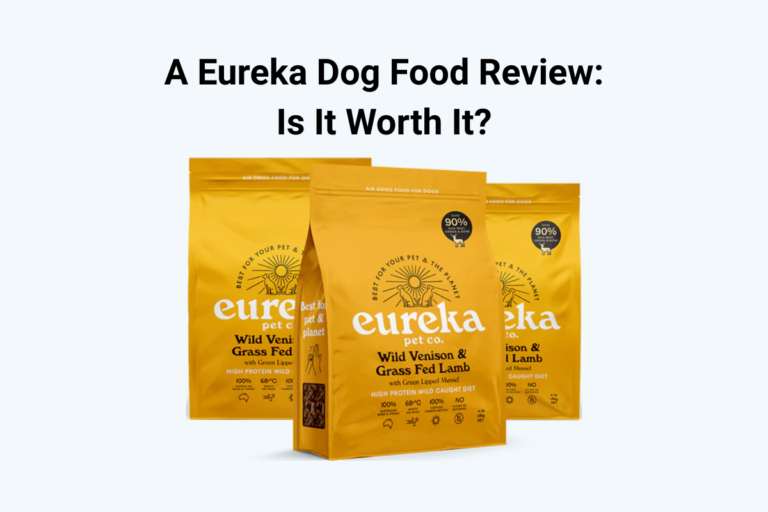
Read our review on Eureka Dog Food, to see if its the right fit for you.
Types of Puppy Food: What’s Best for Your Pup?
There are several feeding options, each with pros and cons. The right choice depends on your lifestyle, your puppy’s needs, and your preferences.
1. Dry Kibble
Dry kibble is the most commonly used type of dog food, and it comes in bite-sized pellets.
Benefits:
- More affordable
- Convenient to store, and longer shelf life
- Easy to measure for portion control.
- Supports dental health by helping reduce plaque and tartar through chewing
Considerations for Dry Kibble:
- Choose a kibble formulated specifically for puppies—not adult or senior dogs.
- Look for whole meat or named meat meals as the first ingredient, with a high quality protein source.
- Avoid products loaded with fillers (e.g., corn, wheat, soy) or artificial additives.
- If you have a large breed puppy, select a large-breed formula to support joint health.
>> Shop all Dry Puppy Kibble Here <<
2. Wet (Canned) Food
Wet food is a soft, moist food sold in cans or pouches. It has a high water content and often contains chunks of meat in gravy or pate form, making it more palatable for picky eaters or puppies with dental issues.
Benefits:
- High water content supports hydration.
- Often more aromatic and appealing to fussy eaters.
- Easier to chew, especially for small breeds or puppies with dental issues
Considerations:
- More expensive than dry food on a per-serving basis.
- Once opened, it must be refrigerated and used promptly.
- Doesn’t provide the dental benefits of dry food.
- Look for wet dog food that has minimal (or ideally) no artificial preservatives
- Look for wet dog food that has real meat as the first ingredient
- AAFCO statement indicating it's complete and balanced for puppies
Tip: Many owners choose to mix wet and dry food, which can offer the best of both worlds.
>> Shop all Wet Puppy Food Here <<
3. Raw Diets, Homemade Diets, and Freeze/Air Dried
A raw diet typically includes uncooked meats, bones, organs, fruits, and vegetables, while others buy pre-made frozen or freeze-dried raw meals.
Some owners prefer a home-prepared or raw diet to control ingredients and ensure freshness, or buy pre-made frozen or freeze-dried raw meals. While this can work well, it must be carefully balanced.
Benefits:
- It’s a natural diet with no artificial additives or preservatives
- Customisable for food allergies or sensitivities
- May improve coat condition, energy levels, and stool quality
- May result in fewer allergies
Risks and Considerations:
- Can be unbalanced if not properly formulated as nutritionally balancing a raw or homemade diet requires expertise.
- Risk of bacterial contamination (for both puppy and humans) like Salmonella or E. coli.
- Can be slightly pricier
We have also written a review on Eureka Dog Food, an air-dried dog food that focuses on sustainability, and quality ingredients.
Should You Feed Table Scraps or Human Food to Your Puppy?
While it might seem harmless to share a few bites of your meal, feeding table scraps can potentially lead to weight gain, nutritional imbalances, and even health risks if the food is not appropriately portioned by nutrients and calories.
Some human foods contain ingredients that are toxic to dogs, such as onions, garlic, chocolate, and artificial sweeteners, which can cause serious health issues. Beyond the health concerns, reinforcing begging behavior at the table can create long-term behavioral problems.
Instead of feeding scraps, focus on rewarding your puppy with healthy, intentional treats during training or as part of a structured feeding routine.
If you do choose to offer human food, stick to safe, dog-friendly options in moderation, such as plain cooked meats or vegetables. By setting boundaries early, you’ll encourage better manners and healthier eating habits for your puppy’s long-term well-being.
Other Feeding Tips for New Puppy Owners
A few other tips and things to consider when feeding your puppy
- Feed multiple times a day at evenly spaced intervals – Be sure to feed the appropriate meals per day, but don't overfeed and leave even time gaps between each feeding time for the day.
- Don’t Feed Immediately After Coming Home – Ensure you're providing the right number of meals without overfeeding, maintaining consistent time gaps between each feeding
- Consult Your Breeder on Dietary Requirements - Your Breeder is a wealth of knowledge, and they’ll be there to guide you if you need help.
- Always Provide Fresh Water – Keep clean water accessible at all times. In hot weather, set up multiple indoor and outdoor water stations to keep your puppy hydrated. Wash water bowls daily to prevent bacteria buildup and biofilm.